Transplanting Orchids
Transplanting orchids is not hard. If you have orchids eventually they will need to be transplanted. My daughter gave me three orchids that she rescued from her place of employment. The business where she worked would purchase orchids when they were blooming to decorate with. Later when they were finished blooming they were thrown away. My daughter asked if she could bring them home. When my daughter and her husband moved over seas I became caretaker of the orchids! They have done fine for the last two years however they have also grown and when there were as many roots cascading over the outside of the pot as were growing inside the pot I decided it was time to transplant!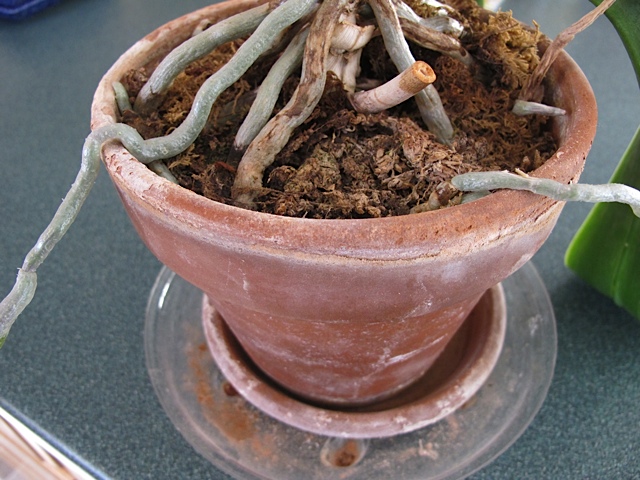
I found that repotting an orchid is not difficult, just different. Like other houseplants orchids need to be moved to larger containers as they grow. Your orchid may need repotting for one of two reasons. First, the orchid may have simply outgrown it’s pot. Repotting is necessary when the actual body of the plant, not just the roots, has grown over the pot’s edge. The other reason to transplant is if the growing medium has broken down so much that air can no longer circulate through to dry the roots between watering. Good drainage is vital to the health of your orchid, and a growing medium that is constantly soggy will lead to root rot.
The best time to repot an orchid is just after it has begun to produce new growth but before the new roots have begun to elongate. Do not repot when it is flowering or has just produced a spike. My orchid had finished blooming and was looking very tired looking, definitely a good time to repot.
I had a large plastic container that I put under the orchid and used to collect the old potting soil. I turned the orchid upside down over the container and gently dislodged it. Sometimes the roots stick to the edge of the pot, in which case you can use a sterilized knife to loosen the plant. With some gently persuasion my orchid came out of the pot. I then gently separated the roots and removed as much of the old potting mixture as I could.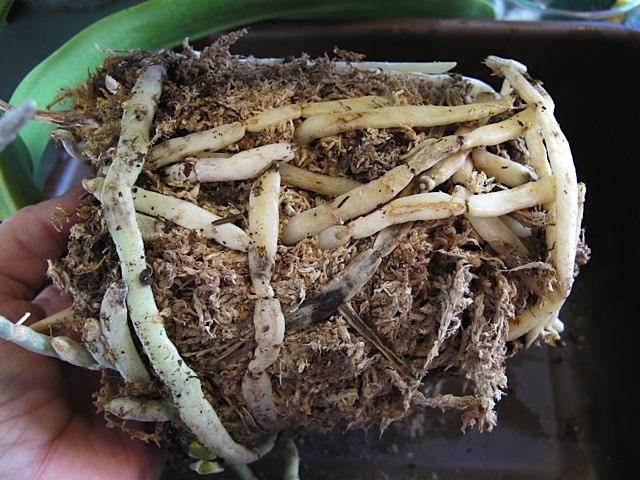
Before repotting, the roots will need to be carefully trimmed. Use sterilized scissors to remove any dead or damaged roots. They are easy to spot, being either dried and crispy or wet and mushy. Healthy roots are firm and white and have light-green growing tips.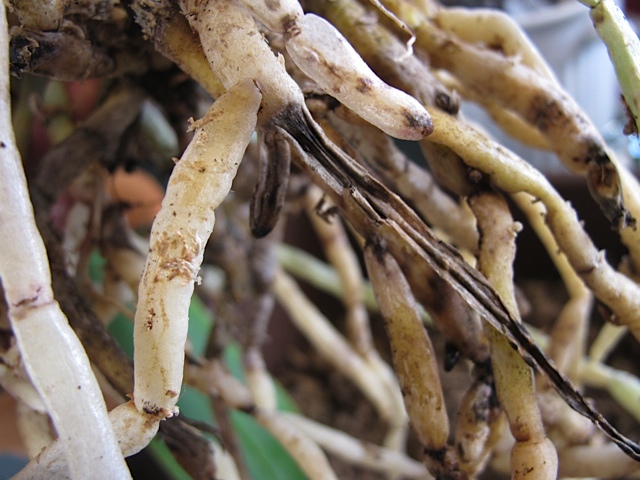
Have your new pot ready; it should be clean and rinsed well. Because orchids require good drainage, be sure to put clean stones, broken crockery or plastic foam peanuts in the bottom of the pots. Rinse the growing medium in water to hydrate it before use. Place some of the dampened mixture loosely on top of the drainage materials. Positions the orchid, and then carefully pack more of the planting mixture around the roots, firming it with your thumbs as you go. Make sure that, when finished, the top of the rhizome is level with the top of the potting mixture.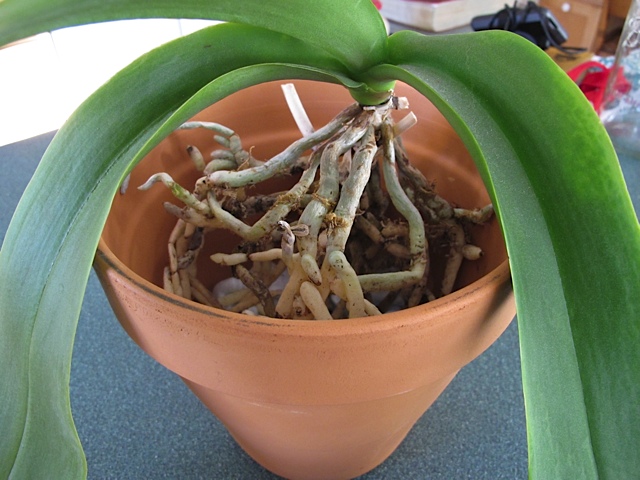
Now my orchid should be much happier, it has fresh growing material and all the roots are in the pot. 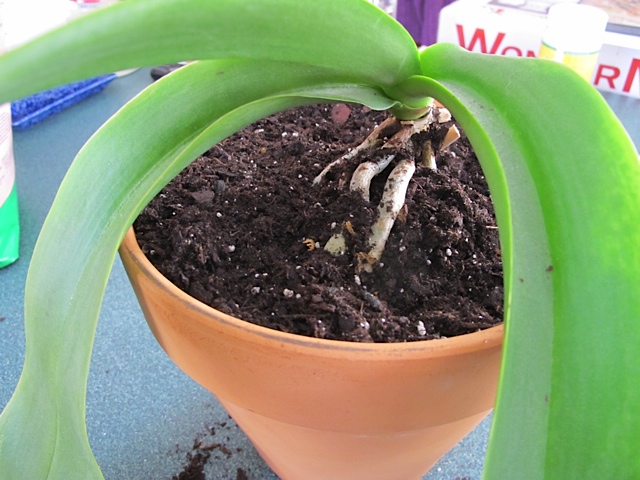 Soon it should be sending out a new spike and I will be rewarded with beautiful blooms.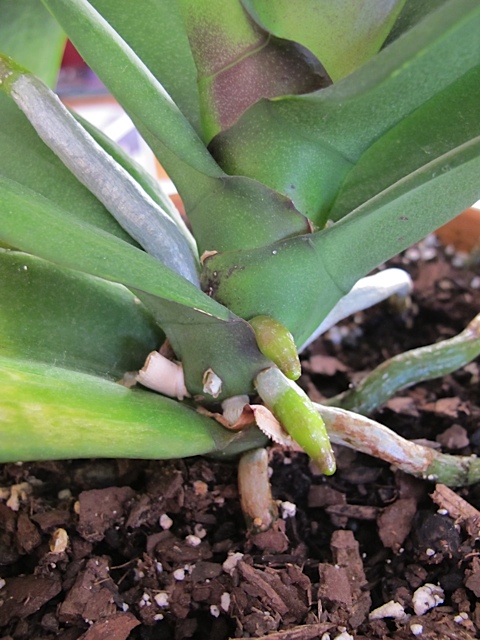
 Nancy on the Home Front