Did you know that by composting you could save money by using less fertilizer and watering less? Did you know that your plants in the garden would grow healthier and be stronger? These are just two of the benefits of composting. In the wild composting occurs when the leaves fall of the trees and decompose providing nutrients for the plants and trees growing in the woods. Perhaps you’ve heard that composting is good for your garden but you don’t know where to start.
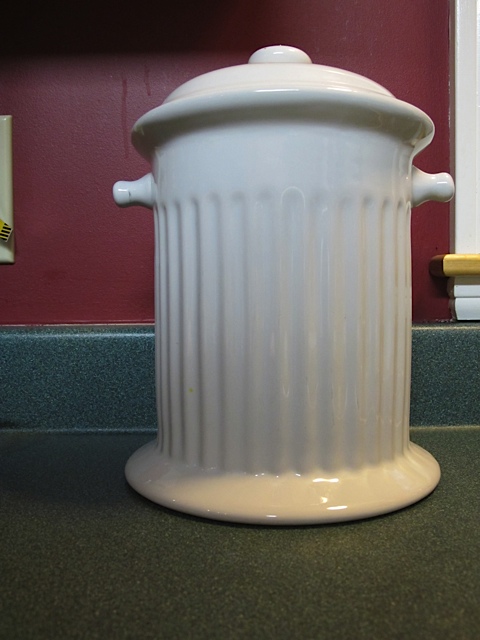
First of all composting is easy. Think about how often you put something in the trash, a few minutes here and there. That’s how simple composting can be. It’s basically lifting a lid up and putting something in a container, that easy! You need a small investment for a container to put your household scraps into another spot outside where you can empty your composting pail. I keep a small composting pail right next to my sink; into it I put all the vegetable scraps, eggshells, coffee grinds, anything that’s not cooked and no meat scraps. When the bucket is full I take it outside and empty it into a larger compost bin. I continue to compost even in the winter, although I realize it is too cold for anything to be decomposing outside, here in Vermont.
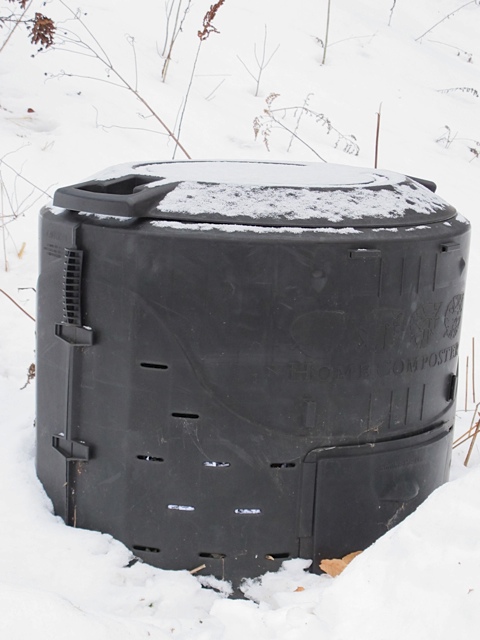
I also have a large compost pile outside not far from our chicken coop. It’s not very organized and basically it’s a spot where we dump garden refuse and chicken shavings. This spring we will be building a much larger three-bin system outside. I want to create an effective compost pile that is actively decomposing. Having a larger composting area will allow me to compost all sorts of material: grass clippings, yard wastes, such as weeds, old plants and spent flowers. We had a large load of wood chips delivered last year when the men were working on the power lines. They were happy to deliver to our house which was just up the street from where they were working. It saved them from having to drive elsewhere and get rid of the load. These wood chips will have been sitting for months by the time we get our compost system set up and will be starting to decay. It will be a good addition to the pile.
When building your compost pile you want to have a good ratio of “browns’ to “greens”. What do I meant by that? Greens are such things as food scraps, grass clippings and rotted manure. “Browns” are cornstalks, leaves, straw, paper, sawdust and wood chips. The “greens” provide the nitrogen and the “browns” provide the carbon. A pile that is too high in carbon will stay cool and sit a long time without breaking down. A pile that is too high in nitrogen will give off the smell of ammonia gas. It’s also likely to get slimy and have a foul odor. Eventually it will all decompose but your goal is to have an effective compost pile that heats up and decomposes so you can use it in your garden. A hot pile is useful for composting food and yard wastes together without pest problems, killing soil diseases, weed seeds and produces compost in a short period of time.
As you start planning your garden this year think of a spot where you can set up a compost pile. Next week I will talk about the different kinds of piles from very simple to more complex. Lets have healthier gardens this year and start composting!
 Nancy on the Home Front