A year ago I had never even heard of Kombucha! What is it? It is a fermented drink made with tea, sugar, bacteria and yeast that is often drunk for medicinal purposes. Although it’s sometimes referred to as kombucha mushroom tea, kombucha is not a mushroom — it’s a colony of bacteria and yeast. Kombucha tea is made by adding the colony to sugar and tea, and allowing the mix to ferment. The resulting liquid contains vinegar, B vitamins and a number of other chemical compounds. Kombucha originated in Northeast China and later spread to Russia and from there it spread to Germany and Europe.

There are many health claims surrounding kombucha such as increased energy, weight loss, better skin, better digestion, detoxification of toxins and many more. Kombucha’s health claims cannot be truly verified, as is the case for many food items claiming increased health with consumption. Kombucha products are sold as “a dietary supplement” in the United States – not a drug, which would require the companies selling kombucha to formally verify to the FDA its safety and effectiveness against its health claims. Hmm, I certainly do not think kombucha is a “cure-all” as some sites and company’s claim. However it does taste good. I have purchased it from various health food stores in the past and decided to try brewing some at home.
I purchased a Kombucha Tea Starter from Cultures for Health. The culture has actually been dehydrated. I have been storing it in the refrigerator since it arrived in the mail.
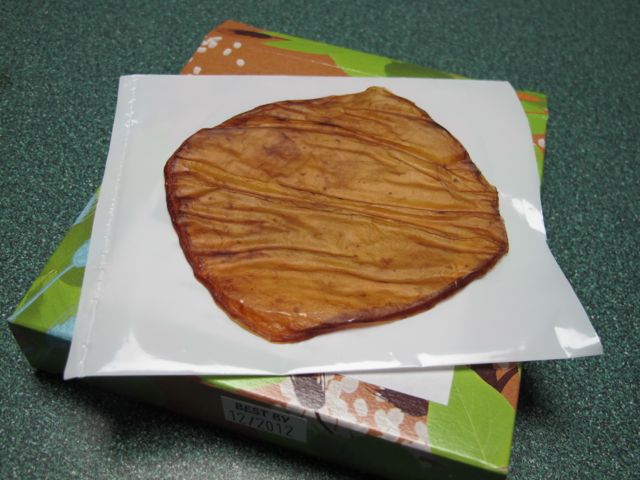
Before beginning I gathered all the materials necessary to rehydrate my kombucha.
*One quart jar
*A plastic or wood-stirring utensil (never let metal come in contact with the culture!)
*A towel or paper coffee filter for covering the jar while brewing
*A rubber band
*One kombucha culture
*Organic loose tea or tea bags. (I am using black tea, which is traditionally used)
*Organic cane sugar
*Distilled white vinegar (acidity of 5%)
*Filtered water
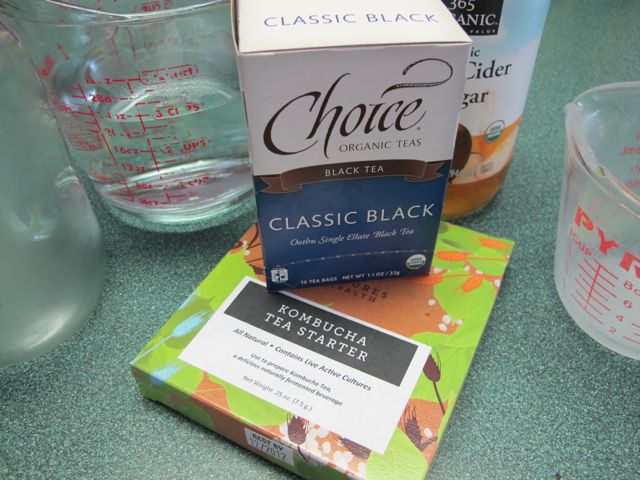
The first step was to combine 2 ½-3 cups of hot water and ¼ cup of sugar together in a jar. Mix until the sugar dissolves and then add 2 black tea bags. You can use either black or green tea. Allow the tea to seep and then allow the mixture to cool to room temperature.
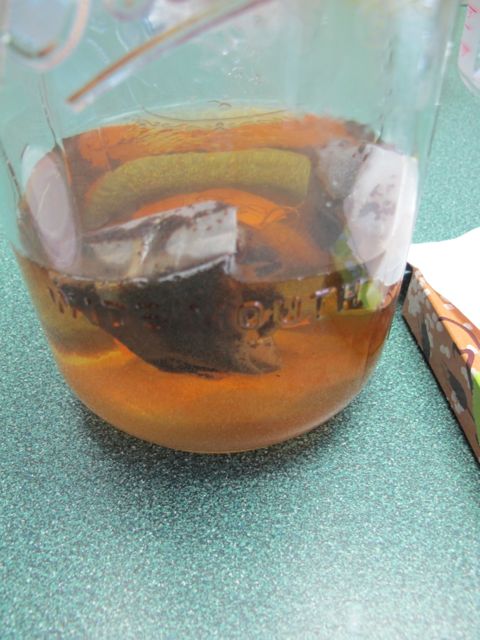
Remove the tea bags and when the mixture is cool add ½ cup vinegar to the mixture. This is very important to maintain the correct pH of the mixture. Carefully remove your culture from the package and place it in your cool, sweetened tea and vinegar mixture.
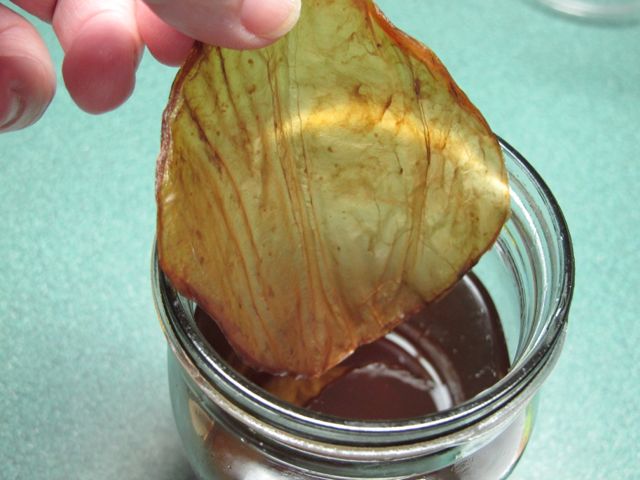
Cover the jar with a towel, coffee filter or cheesecloth and a tight rubber band. Allow the jar to sit undisturbed in a warm (70-85 degree F) and out of direct sunlight for 30 days. During this time the culture will rehydrate. To determine whether my rehydration batch of Kombucha is successful, I need to look for a change in the appearance of the culture, a lower pH, a sharper, more vinegary taste than when it started, and possibly the formation of a new culture. If any of these have occurred, I can then use or discard the batch that I’ve used to rehydrate the culture and transfer the culture into a new cooled solution of sugary tea plus vinegar or some of the liquid from the first batch. This will then become my next batch of Kombucha.
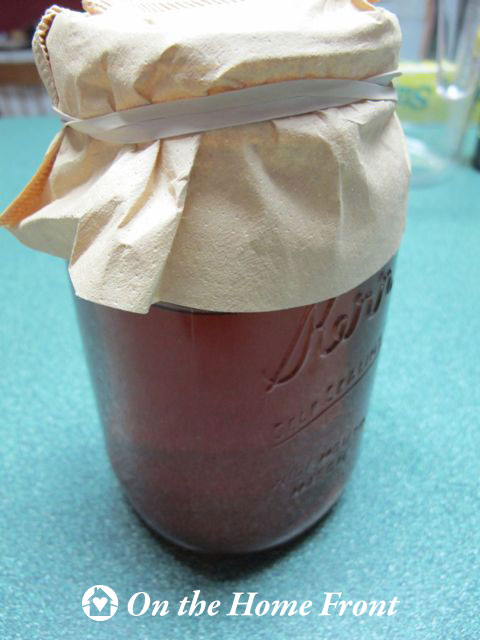
So follow with me as I attempt to brew and enjoy my first batch of Kombucha. I’ve completed the rehydration step, now to be patient and see what happens in the next 30 days. Cultures For Health has some excellent videos on the whole process if you are interested in learning more. Click here to watch the vidoes.
Linked to: HomemakersChallenge, LiveRenewed, SimpleLivesThursday

 Nancy on the Home Front