When trying to figure out the best way to store your eggs the first thing to find out is where are your eggs coming from? Do you purchase them from the store or from a local farmer? Or do you have your own chickens?
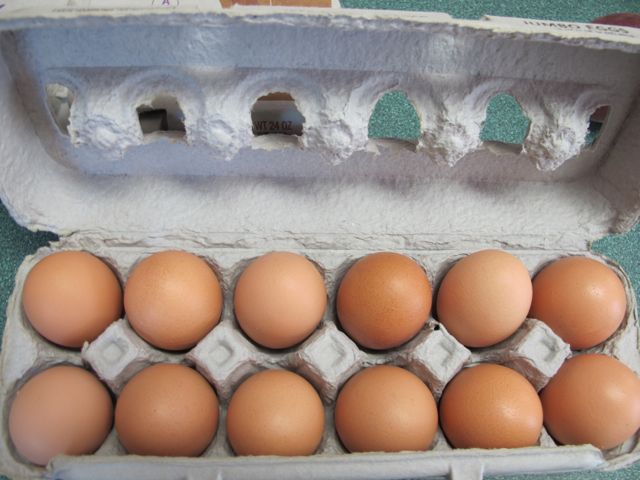
If you purchase your eggs from a local grocery store always check your container for cracked or broken eggs. Cracks and leakage could lead to contamination of the egg. Don’t buy out-of-date eggs either. Check the dates on the cartons as well, egg cartons with the USDA grade shield on them must display a “pack date” or the day the eggs were washed, graded and placed in the carton. This number, called the Julian Date, is a three-digit code that represents the consecutive day of the year starting with January 1 as 001 and ending with December 31 as 365. The “sell-by” or “expiration” date is not required by the federal government, but may be required by the egg laws in the state where the eggs are marketed. Always purchase eggs before the sell-by or expiration date on the carton. When you get your eggs home from the store refrigerate them.
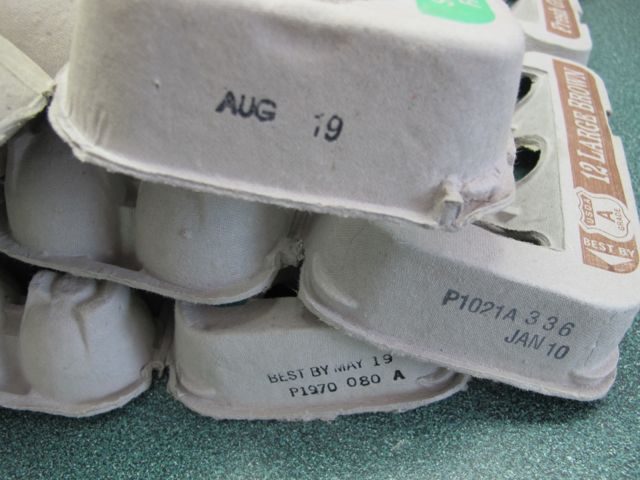
Whether purchasing eggs from a local farm or farm market or collecting your own make sure the eggs are clean and dry. Then place them in an egg carton and label them with the date they were collected or purchased. Eggs are best stored in the refrigerator. Eggs are good for one month after the date of collection, if stored in the refrigerator. I have actually found that they’re good for a few weeks after this, but I bake with them or hard-boil them.
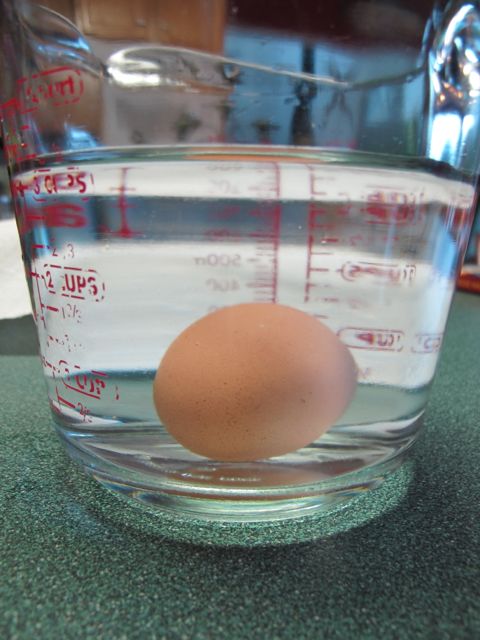
There is a way to check egg freshness; fill a bowl or large measuring cup with water and place your eggs in it. An egg that floats has too big an air pocket inside the shell; the contents have evaporated too much and it is likely spoiled. Compost it.
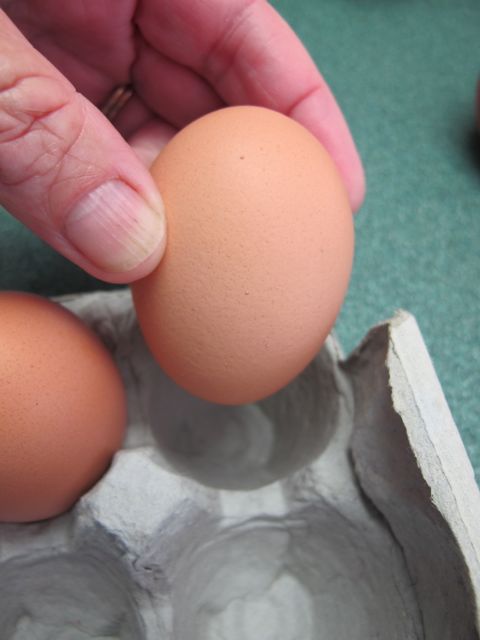
One last hint, when storing your eggs store them with the large end up. This will keep them the freshest. This is because the air cell in an egg is located at the large end, so less moisture will evaporate out of the egg if it is set with the air cell up in the carton (since the pointy end, with the egg white closer to the porous surface of the shell, is less exposed to the air when it is sitting in the carton).
Linked to: WeAreThatFamily

 Nancy on the Home Front