Most everything your plants need come from the soil. Many gardeners often don’t understand what good soil is or how to achieve it. Often folks will head to the store and buy a bag of rose food or tomato food and sprinkle it around the plant. Good soil has good structure as well as fertility. Structure is something to work on. Improving your soil isn’t difficult to do, nor does it cost much but you should understand some basics.
Soils are classified according to the size of the particles of which they are composed. Large size particles are gravel and the other end of the spectrum is clay, with particles that are very tiny. In between are fine gravel, coarse sand, fine sand, sandy loam, loam, silt loam and silt. Soils with larger particles drain well while soils with smaller particles tend to be heavier.

Loam is considered to be the ideal soil, water and air can move freely so the soil tends to be well drained and rich in oxygen. Plant roots can grow well. If a soil is too light the water may drain through too quickly taking all the nutrients with it, the end result is that the soil is dry and infertile!
Clay soil on the other hand tends to hold water and the plants can get water logged and rot.

Different plants like different soil. Pay attention to requirements of the plants in your garden. Plants that need the extra fertility and moisture of clay soils have strong roots that don’t mind the extra push required to grown.
How do you know what type of soil you have? Take a soil test. On a day when the soil isn’t unusually dry or wet pick up a handful and squeeze it. Does it form a tight ball that doesn’t come apart when taped? Is it sticky when wet but hard and lumpy when dry? If so, it’s a clay soil. If it runs through yoru fingers and doesn’t form a ball it’s sandy. If it holds together when tapped it’s loam.
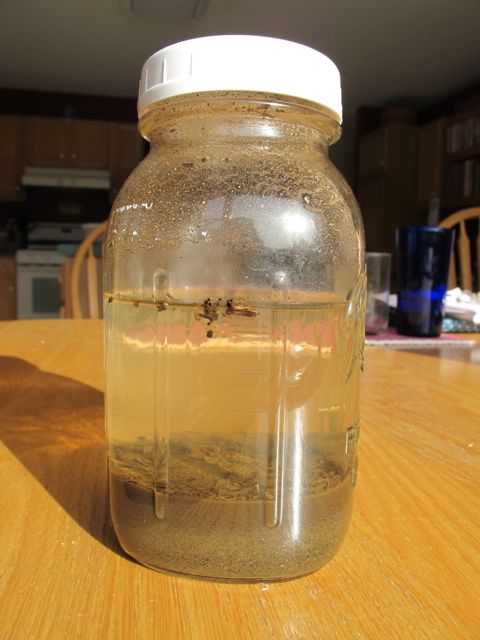
For more accurate results you can do another test. Take several samples of soil, mix well and add some to a mason jar of water. Shake well and allow to sit. The soil will settle out in layers, heaviest first. This will give you a rough idea of the composition of your soil.
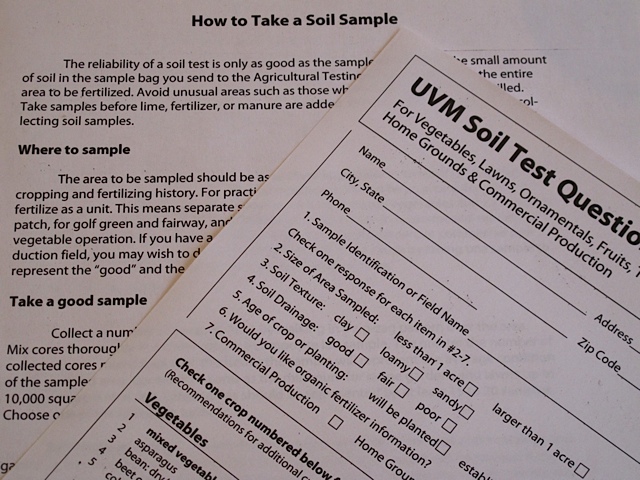
For the most accurate results have a professional soil sample done. I try to have one done every other year through the state university. For a very reasonable price I just send them a soil sample and tell them what I plan to be growing. They will send me a detailed report of what my soil is lacking.
If you follow the information I gave you on feeding your soil and know your soil well you will be well on your way to having an abundant garden harvest!
Linked To: TuesdayGardenParty, GardenTuesday, OutdoorWednesday, WildcraftingWednesday, FromTheFarm, FarmgirlFriday, SimplyNaturalSaturdays, CleverChicks, TheBackyardFarmingConnection, TuesdaysWithATwist

 Nancy on the Home Front