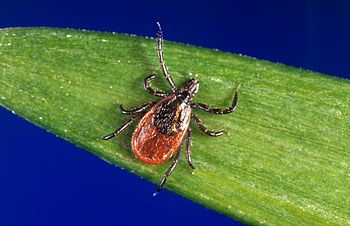
May is Lyme Disease Awareness Month. We have known about Lyme Disease for years. We originally lived in Lyme, Connecticut where the disease was first discovered. Many of my family members have been bitten by Lyme ticks and have developed the telltale rash.

Lyme disease is caused by the bacterium Borrelia burgdorferi and is transmitted to humans through the bite of infected blacklegged ticks. Typical symptoms include fever, headache, fatigue, and a characteristic skin rash called erythema migrans. If left untreated, infection can spread to joints, the heart, and the nervous system. Lyme disease is diagnosed based on symptoms, physical findings (e.g., rash), and the possibility of exposure to infected ticks. Laboratory testing is helpful if used correctly and performed with validated methods. Most cases of Lyme disease can be treated successfully with a few weeks of antibiotics.
Lyme disease was first discovered in the early 1970s when a mysterious group of rheumatoid arthritis cases occurred among children in Lyme, Connecticut and two neighboring towns. Researchers began to look at several possible causes. They realized that the children lived and played near wooded areas and they began to focus their attention on deer ticks. It wasn’t until 1981 that researchers at Rocky Mountain Laboratories identified the cause of Lyme disease and discovered the connection between the deer tick and the disease.

The best way to prevent Lyme disease is to avoid contact with deer ticks, especially during the summer months when infections are most common. This map shows the areas of highest risk for Lyme Disease.

Other useful tips
- Wear long pants, long sleeves and long socks to keep ticks off the skin. Tuck shirts into pants, and pant legs into socks or shoes, to keep ticks on the surface of your clothing. If outside for a long period of time, tape the area where pants and socks meet to prevent ticks from crawling under clothing.
- Wear light-colored clothing to make it easier to spot ticks.
- Spray clothing with the repellant permethrin, found in lawn and garden stores. Do not apply permethrin directly to the skin.
- Spray exposed clothing and skin with repellant containing 20 to 30 percent DEET to prevent tick bites. Carefully read and understand manufacturer instructions when using repellant, especially when using the products on infants and children.
- Pregnant women in particular should avoid ticks in Lyme disease areas as infection may be transmitted to the fetus.
- Avoid wooded areas and nearby shady grasslands. Deer ticks are common in these areas, and particularly common where the two areas merge.
- Maintain a clear backyard by removing yard litter and excess brush that could attract deer and rodents.
- Once indoors after being outside, check for ticks, especially in the hairy areas of the body, and wash all clothing.
- Before letting pets indoors, check them for ticks. Ticks may fall off and then attach to humans. Pets can also develop Lyme disease.
Research supported by NIH and CDC suggests that a tick must be attached to the body for at least 36 hours to transmit Lyme disease. Risk of infection can be decreased by promptly removing ticks. After finding a tick, remove it using fine-tipped tweezers; do not use petroleum jelly, a hot match, nail polish or other products. Grab the tick close to the skin and pull up gently so that all parts of the tick are removed. Wash hands afterward with soap and water or waterless alcohol-based hand rub, and clean the area with an antiseptic, such as rubbing alcohol, or soap and water. Place the tick in a tightly closed container for examination by the local health department or healthcare provider.
As we enter into the warm summer months when ticks are apt to be found take precautions to prevent tick bites and if you do notice a rash forming have it checked by your doctor.
 Nancy on the Home Front