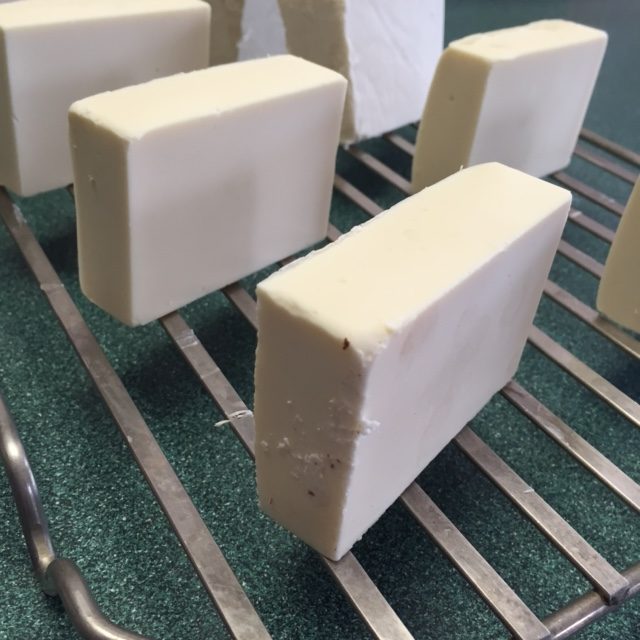
Making soap has been on my to do list for a long time! I collected everything I could possibly need and finally decided to give it a try. Everything I read said the items should only be used for soap making so I collected a small stock pot (stainless steel NOT aluminum) and a plastic two quart pitcher that will be used for ONLY lye water.
I read a lot about pure lye and I think that’s why it’s taken me a while to actually get around to making soap. Lye is caustic and burns quickly and severely. I decided the soap making process would take place in the garage for safety! I will also be wearing safety goggles and gloves!
Here are the accessories I have gathered.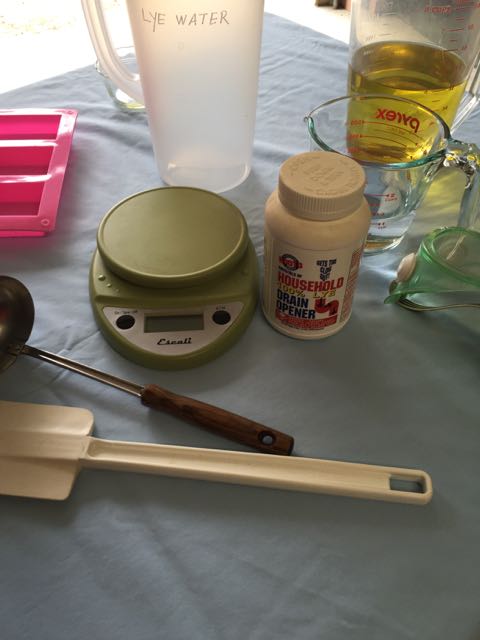
A stockpot – stainless steel NOT aluminum
Rubber gloves
Apron
A large plastic spatula
A soap mold
Stick blender
Measuring cup
Digital scale (which I plan to reuse!)
32 oz of Olive Oil
8 oz of water
4 oz of pure lye
First I created a space to work in the garage. I had a clean table and covered up all the equipment. Then I very carefully measured out my ingredients. The last thing I want to make is a soap that might burn the skin!
Once the ingredients were measured I mixed the measured lye and water in the pitcher and stirred it well with my spatula. I added the lye to the water (never do it the other way around, adding water to lye can cause a caustic volcanic eruption that is very dangerous)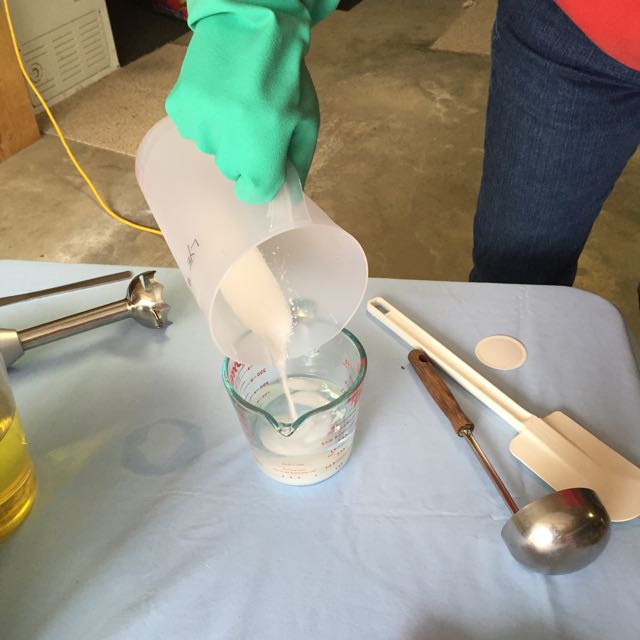
Set the pitcher aside in a safe place. Allow it to cool (100 to 125 degrees F). DO NOT inhale the fumes!
While waiting for the lye water to cool I measured the olive oil into my pot.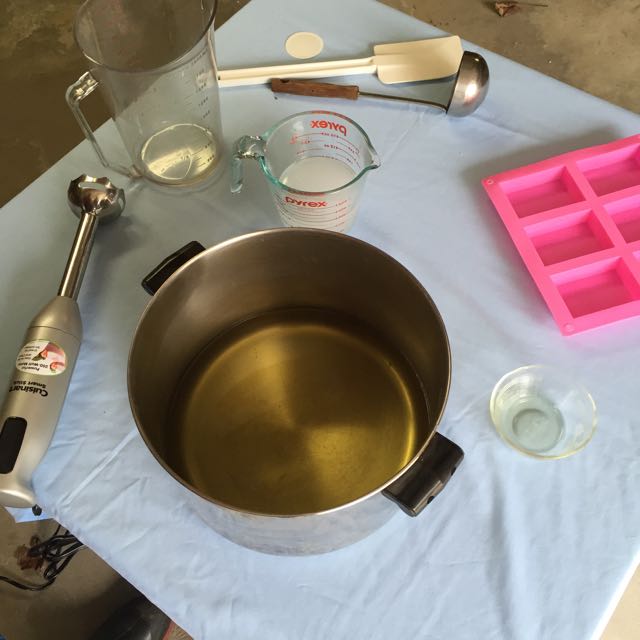 Once the lye cooled I slowly combine the lye water and oil. I was very careful not to splash while combining the mixture. With my stick blender I stirred the mixture until is thickens to the consistency of custard. This is called tracing. I realized as I was making the soap that my pan may have been too large which allowed for too much air to get into the mixture. We’ll see how the soap comes out.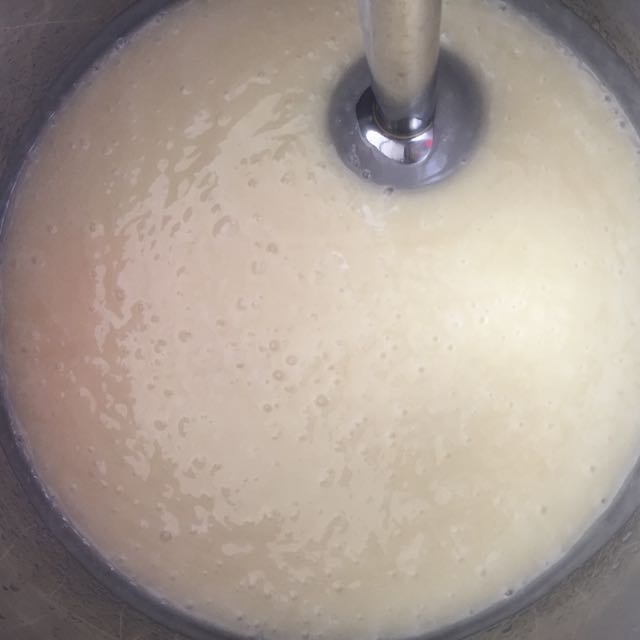
It should only take a few minutes to reach this point. The longer you stir the thicker your trace will be and the harder it will be to pour into your mold! Once the tracing has occurred add your essential oils. I used 2 Tbsp of lavender essential oil. Then carefully pour the raw soap into your mold. Cover the mold with plastic or a piece of cardboard to keep the soap clean.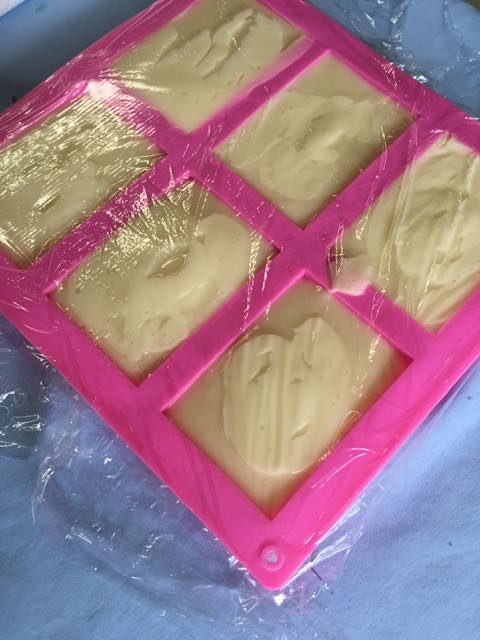 Then cover with an old towel to insulate the soap. After a day or two the soap should be hard and can be turned out of the mold. Allow the soap to cure and dry. Place them on a wire rack so they can breathe.
 The initial result looks good! The soap is hard and came out of the mold easily. Now to let the soap cure. The curing should take 4-6 weeks to complete. After that your soap should be hard and firm. Stay tuned… I’ll let you know next month how the soap works in the shower!
 Nancy on the Home Front
Nice! Your soap looks fabulous so far. I’ll be interested in hearing your review as I’ve never used an immersion blender when making mine. I’ve been making soap for 20 years, this year, and loved making it every time. I sold at craft shows a few times, also. That was a lot of fun, too.
Have a lovely week!
Toni
LikeLike
Toni,
I read a lot about making soap and the immersion blender seemed like it would make the process go quicker, rather than stirring! However I’ll have to see how the soap is after it cures. I’m afraid the immersion blender may have added too much air to the final product!
LikeLike
Nancy, I just popped in to let you know I tried your method for making soap (after doing it the old, cold process way for years and years) and used an immersion blender to mix it, for the first time. Wow, what a difference it made. The soap was ready to pour in just a few minutes. I have actually had batches of soap that had to be stirred by hand for an hour before. How tiring it was. I’m sure the immersion blender would have made a huge difference. And btw, the soap is almost always saponified within 2 days (meaning there shouldn’t be any active lye after that time) so you can try it anytime after that if you want to. I made a batch of orange soap yesterday, and it turned out so well I made 2 more batches today, one peppermint and one of lavender. Anyway, thanks for posting your method. 🙂
LikeLike
Toni,
As a newbie in soap making I am very glad my tip of using an immersion blender worked for you! Also glad to hear that soap is almost always saponified within two days! I’ve been letting it sit for weeks, going to have to give it a try!
LikeLike
I had no idea that something as innocent as soap could be so scary in the making ! Surely there has to be a less dangerous way ? I,ve had soap making on my “things to try ” list for a long time , really interesting to see how its done …thanks for sharing 🙂
LikeLike
Daisy,
I think there are other methods where you melt soap to create new soap? I’ve always wanted to try this method and found it was pretty easy as long as you take all the precautions!
LikeLike
Hey Nancy,
Congratulations on your pretty soap. I’m proud of you for taking the step. I have wanted to make soap for a long time now. I keep putting it off, but now that I see how simple it is, I might pull myself together and give it a try. I hope your soap comes out perfect. I hope you’ll post to let us all know.
Bobbie
LikeLike
Hi Bobbie,
Stay tuned I will let everyone know in 4-6 weeks how my soap works in the shower! I was just so pleased that it came out of the mold looking like soap! I was also surprised at how easy it was, I took all the safety precautions and made it in our garage with al the doors open and I didn’t have any problems! 🙂 Can’t wait to make another batch!
LikeLike
Can lard or tallow be used in place of the olive oil? (and in the same amount)? Looks like you did a good job with your soap.
LikeLike
Little dove,
I am so new to soap making I am not sure of the answer! I do know the lard or tallow would have to be illiquid form before using this method!
LikeLike