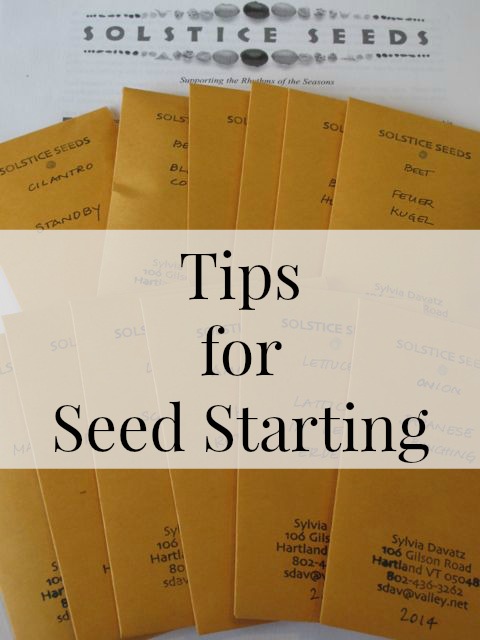
Your seeds have been ordered. The next step is to figure our which seeds need to be started inside. Here are a few tips for seed starting inside.
When To Start Your Seeds
First you need to read the back of your seed packets. Many seeds like beans, peas, lettuce and carrots can be planted directly into the garden once the soil has warmed up enough. Other seeds like tomatoes and peppers need to be started ahead of time. Tomatoes and peppers are usually started about 6-8 weeks before planting time. This gives the plants time to get established and gives you a better chance for a good harvest.
Once you’ve determined when you need to start your seeds inside the next step is to either make your own seed starting mixture or purchase a commercial mix. I have always made my own seed starting mixture. It is very easy and makes enough to start all my seeds with some leftover!
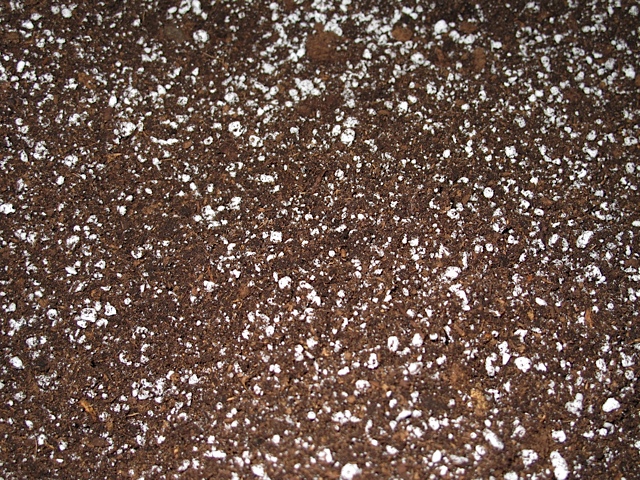
This is my recipe for making my own seed starting mix:
1 part sterilized garden loam or topsoil
1 part coarse sand or perlite
1 part peat moss
Combine the three ingredients and mix well. Store in an airtight container.
Making Your Own Seed Starting Mixture
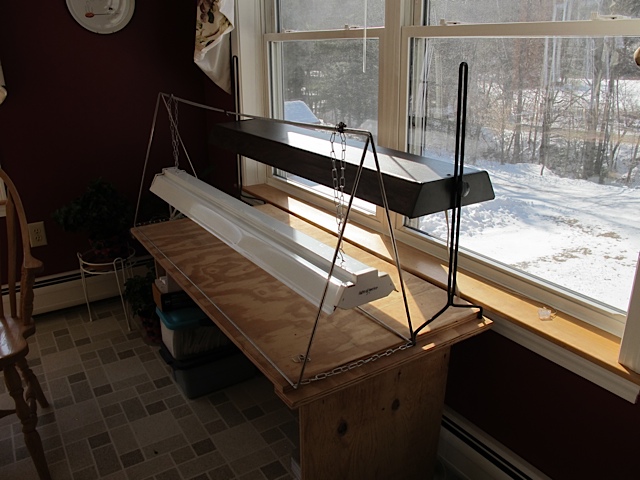
Starting seeds inside is very simple. My husband made me a simple plywood table which I use as a grow table. It just fits my two grow lights and when I placed it in front of our kitchen window it was the perfect place to start my seeds.
Planting Your Seeds
One rule of thumb is to plant the seeds 2-3 times as deep as the seed is wide. Leek and onion seeds are rather small and are pretty much sprinkled on the top of the soil.
Use only the best seeds. Old seeds or seeds that have not been stored properly may not germinate. If you have time do a seed germination test to determine the viability of your seeds. Check my video on the seed viability test I did on some pepper and tomato seeds.
Care of your Seeds
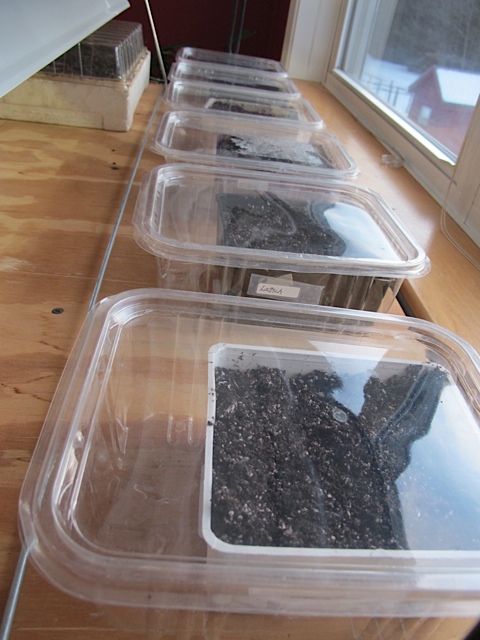
Once my seeds are planted I make sure the soil is moist. One way to do this is to fill a plastic bin with water and float the pot in it until the surface is damp. I then label each container with the date and the name of the plant. This will help me keep track of how many days it took the seeds to germinate and will also help me when it comes time to plant the vegetable plants in the garden. I may be able to tell leeks from broccoli, but it is very important to keep track of the variety of peppers and tomatoes.
Cover the seeds with a plastic or glass cover to create a mini greenhouse. You need to keep the seeds warm; a heating pad may be necessary. You do not need a grow light until the seeds sprout. Once you see the first seed sprouting remove the cover and place under your grow light. Keep a close eye on the seedlings, as you don’t want them to dry out.
Starting seeds is an easy process. It is always a good feeling when it’s time to start your seeds. It’s a good sign that spring can’t be far behind and soon you will be working outside in the garden.
 Nancy on the Home Front
Thank you….
LikeLike
You are welcome!
LikeLike
I have to do all my planting in the ground after it warms. I would like to start some things indoors, but we travel too much during the spring. My garden is small, so I just purchase starts at the nursery as needed. – Margy
LikeLike
Margy,
It will be interesting to see if I go back to starting seeds again once we have our own garden again, guess it will depend on what I want to grow!
LikeLike
What an informative post! I especially love you show in your video how to check for viability! I love your posts!
LikeLike
Be careful, once you start, it’s addicting! I over did it this year. I have so many to transplant I don’t know how I am going to get it all done! Thanks for these tips!
LikeLike
Tamara,
I can never stand to throw out seedlings I have started! 🙂
LikeLike
Thank you for the post. I read a few new things so I thank you. I have started quite a few things already but this showed me a few new tricks too. Great job Nancy!
LikeLike
This year we put up a small green house so now I can use it as well as putting seeds in the windows. More seeds starting this year.
LikeLike
Candy,
I would love to have a green house!
LikeLike