I would love to have a perfect garden, one that never had weeds or pests! However that is not the case, I have more than enough weeds to keep me busy pulling everyday and many varieties of pests. The most common variety found in my garden right now is the Japanese beetle.
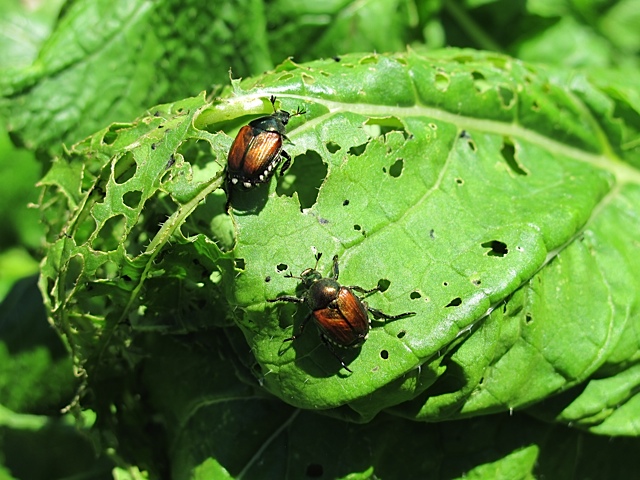
Japanese Beetles have only been in the United States since 1916 when they were found in a nursery near Riverton, NJ. It is thought the beetle larvae entered the US in a shipment of Iris bulbs. I’m sure just about every gardener is familiar with the shiny, metallic green of the Japanese beetle. One little Japanese beetle might not do much damage but if there are a large number of them in your garden they can easily defoliate shrubs and trees, not to mention the plants in your garden.
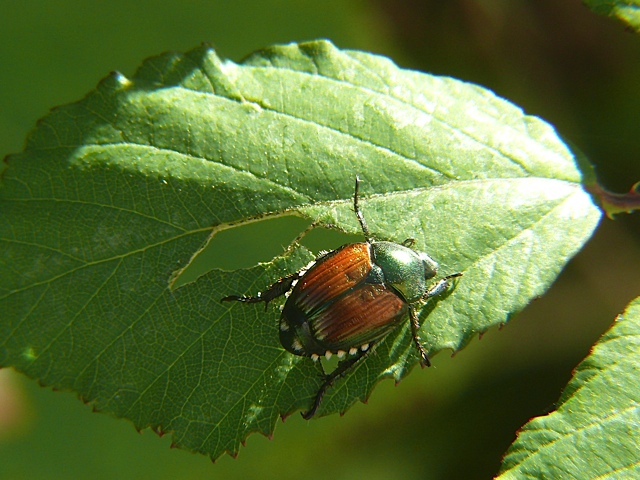
There are four stages of the Japanese beetle: egg, larvae, pupae and the adult beetle.
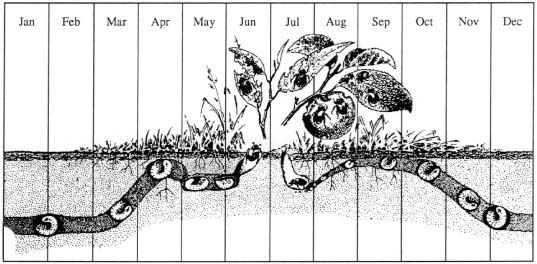
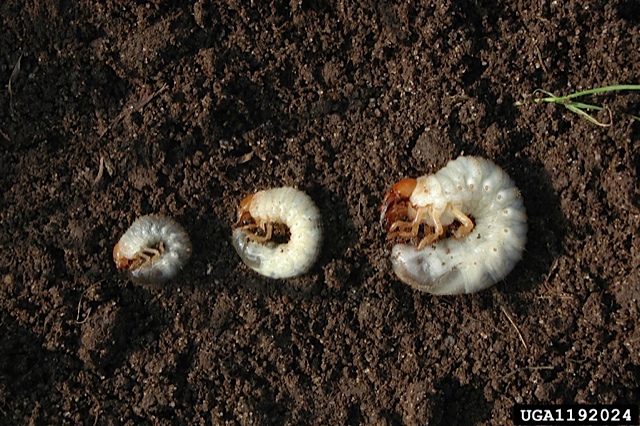
The eggs are laid in the soil and are small, oval and white. The larvae stage is the white grub stage that you often find when you are weeding. They will grow in length as they feed and mature.
During the pupae stage the grub starts to transform into a beetle. They start out cream colored and age to a reddish brown. The adult beetles are about 3/8 inch long and the shell is shiny, metallic green with copper-brown wing covers. Adults emerge from the ground sometime from May to June, depending on your area and they live for 30 to 50 days. The females eat for a few days and then burrow into the soil to lay their eggs. They then return to feeding and mating and start the cycle all over again. By the end of the season, each female Japanese beetle will have laid about 50 eggs!
During the adult stage they damage plants by skeletonizing the foliage, what you are left with is a lacey looking leaf. The plant eventually withers and dies.
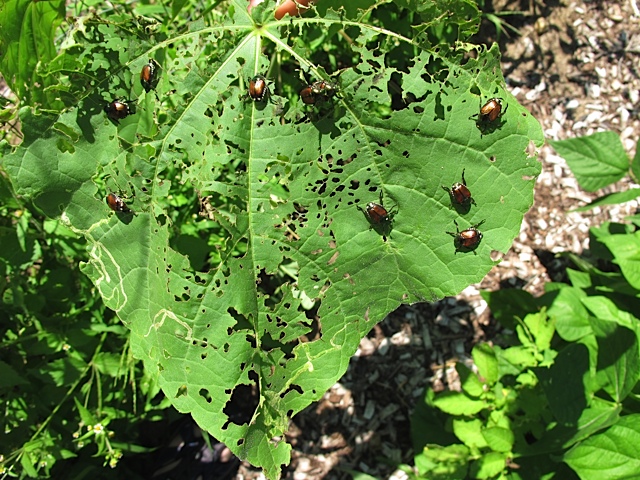
It’s just about impossible to get rid of Japanese beetles totally, as more will fly in. One effective way is to go into your garden with a jar of soapy water and knock the beetles into the jar. Since the beetles feed in groups it is pretty easy to fill a jar with them. You can also use insecticidal soap to help control them by spraying directly on the beetles. There are also traps you can use which are effective at catching a lot of beetles however they also attract beetles and you may be attracting those beetles from your neighbors!
If you have a large population check your soil in late summer. If you see more than a dozen grubs in a one-foot square of soil you might want to treat your lawn with a grub control. It is at the grub stage that it is susceptible to a fatal disease called milk spore disease, caused by a bacterium called milky spore. The USDA developed this biological control and it is commercially available in a powder form for you to apply to lawn areas.
I kill every Japanese beetle grub I find when I am weeding, I also collect the beetles and put them in a jar of soap. This year I am also going to try putting down some milky spore and see if that makes a difference. What have you used to combat the Japanese beetle?
Linked to: MsGreenthumbJean, ASouthernDaydreamer, BlissfulRhythm, TootsieTime
 Nancy on the Home Front